

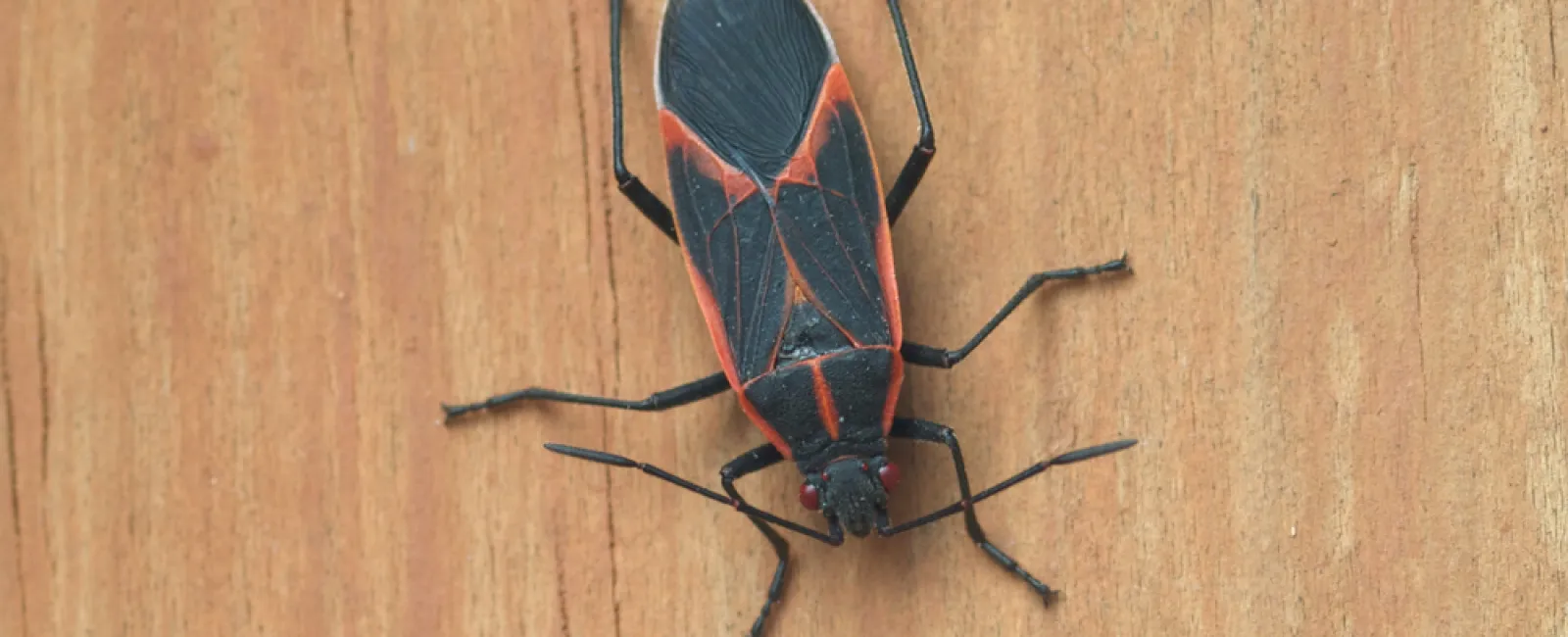
When fall arrives in Minnesota, some things remain the same: The air turns cool, the trees glow with color, and the boxelder bugs return. Easily recognized by their striking black and red markings, these pests are notorious for appearing in late summer and early fall.
In this post, we'll cover what box elder bugs are, why they invade homes in the fall, how to prevent infestations, and why homeowners across Minnesota trust Valor Pest Solutions to keep them under control.
What Is a Boxelder Bug?
The boxelder bug is a common nuisance pest found throughout Minnesota, much of the Midwest, and other regions of North America. You may also hear them referred to as box elder beetles, elderbugs, or box beetles.
Boxelder bugs have dark, black bodies with red or orange outlines along their thorax and wings. They're most often found on or near box elder, maple, and ash trees. As fall temperatures drop, these bugs begin seeking warmth and shelter, and unfortunately, that often leads them into and onto homes. Boxelder bugs may enter homes in large numbers as they search for protected sites to fight the cold.
After emerging in spring, boxelder bugs become active again. In early summer, adult boxelder bugs begin feeding on plants and seeds and start mating and laying eggs on trees.
Box Elder Bug Facts
- Scientific name: Boisea trivittata
- Also called: Box elder beetle, elderbug, black elder bug
- Length: About ½ inch
- Color: Black with red or orange lines on wings
- Season: Most active in fall
- Habitat: Near box elder, maple, and ash trees
- Behavior: Overwinters in homes and buildings for warmth
Life Cycle and Habits of Boxelder Bugs
Boxelder bugs are notorious for their habit of gathering in large numbers on boxelder trees and ash trees throughout Minnesota. Their life cycle begins in early spring, when adults emerge from overwintering sites and head straight for female box elder trees.
As temperatures rise, boxelder bugs begin mating, and females lay eggs in protected spots on the trunks, branches, and leaves of their preferred host trees. These eggs hatch into nymphs, which continue to feed and grow throughout the warmer months. While boxelder bugs feed primarily on boxelder trees, they're not picky; they'll also target fruit trees, sometimes causing minor deformities in fruit or yellowing of leaves.
By late summer and early fall, boxelder bugs start searching for sheltered areas to spend the winter. This is when you'll notice them congregating in large groups on the sunny, southern, or western side of buildings—drawn by the warmth. Boxelder bugs are strong fliers and can travel several blocks in search of suitable overwintering sites. Once they find a promising location, they slip inside through small cracks, dryer vents, outdoor faucets, and other tiny entry points.
Why Boxelder Bugs Invade Homes in the Fall
In nature, boxelder bugs hide under bark, leaves, or debris to survive the winter. But in urban and suburban areas, they prefer to overwinter inside man-made structures.
When the days get shorter and the weather cools, you'll notice them gathering in large groups on the south and west sides of homes—areas warmed by afternoon sun. From there, they slip inside through cracks around windows, doors, vents, and siding.
Although box elder bugs don't bite, sting, or damage wood, their presence indoors can be irritating. Boxelder bugs indoors are often found in hidden spots like wall voids, attics, and basements, where they may overwinter until spring. They stain walls and curtains with their droppings, and when crushed, they release a distinct, unpleasant odor.
Boxelder Bug FAQ
What Do Boxelder Bugs Eat on Boxelder Trees?
They typically feed on the seeds and leaves of boxelder, maple, and ash trees. They don't harm trees severely, but their feeding can cause minor discoloration on leaves or seed pods. In fruit-bearing trees, boxelder bug feeding can sometimes contribute to premature fruit drop.
Do Boxelder Bugs Have Nests?
These insects don't build true nests. Instead, they cluster together in protected areas, forming large groups under siding, shingles, or window trim.
Are Boxelder Bugs Dangerous?
No. They're not known to bite, carry disease, or damage homes.. However, a boxelder bug infestation can be messy and unpleasant to live with.
What Is a Yellow Boxelder Bug?
These are immature nymphs that appear orange or reddish before developing the darker adult coloring.
How to Prevent a Box Elder Bug Infestation
Fall is the ideal time to protect your home from boxelder bugs. Taking proactive steps to prevent boxelder bugs from entering your home—such as sealing entry points and using natural deterrents—can save you trouble in the future. Once they're inside, they can be difficult to remove completely until spring. Here's how to reduce your risk:
- Seal entry points. Caulk gaps around windows, doors, siding, and utility openings to prevent boxelder bugs from getting inside.
- Repair screens. Check for tears in the window and vent screens.
- Install door sweeps. Keep insects from crawling under exterior doors.
- Vacuum, don't crush. If bugs get inside, vacuum them up using a vacuum bag and discard the bag immediately to prevent odors.
- Consult a pest professional. Preventative treatments in early fall can stop infestations before they start.
Other Fall Pests to Watch For
Box elderbugs aren't the only fall invaders in Minnesota. As the weather cools, you may also notice:
- Asian lady beetles gathering near windows and attics.
- Cluster flies hiding in walls and ceilings.
- Stink bugs creeping inside to spend winter.
Boxelder bugs often appear alongside other insects such as stink bugs and ladybugs, so effective pest control should address multiple insect types. These seasonal pests follow similar patterns, and the best defense is early, professional prevention.
Why Choose Valor Pest Solutions for Box Elder Bug Control
At Valor Pest Solutions, we specialize in protecting Minnesota homes from fall invaders like boxelder bugs. Our team understands the local climate, pest patterns, and the specific challenges Minnesota homeowners face each season.
When you choose Valor, you get:
- Customized pest control designed for your property and pest pressures.
- Eco-friendly, pet- and family-safe treatments that protect your home and the environment.
- Local expertise from a Minnesota-based team that knows the area's pests inside and out.
- Long-term prevention, not just quick fixes.
Don't let box elder bugs take over your fall season. Contact Valor Pest Solutions today to schedule your inspection and enjoy a comfortable, pest-free home all year long.
